Monday, January 31, 2011

Black sapote oat bars, variation two

My original black sapote oat bar recipe, two years ago, was a pretty big hit, both for the folks who tried the batch I made and for others looking to use their excess sapotes. As I said in my last post, I've got some new ideas for flavor combinations. I figured it would be a good idea to keep the rest of the dish constant so I could isolate that variable to see how it changes the results.

Before, the filling in the bars was made up of black sapote pulp mixed with walnut butter, a bit of cinnamon and a bit of coffee. No cooking involved. The result was a sort of mocha/fig flavor with toasty, nutty overtones. I'm going a rather different direction this time.


Filling ingredients:
1 1/2 cups black sapote pulp
1/2 cup not-too-fruity, not-too-dry red wine [I used a pinot noir]
2 Tablespoons dutch process cocoa
1/2 cup sugar
1 pinch salt
1/2 Tablespoon vanilla

1. Bloom the cocoa in the wine for a minute or two.

2. Add the choco-wine, sugar and salt to the black sapote pulp. Mix well, mushing up the sapote. Cook down over medium-low heat until it thickens and reduces to 1 1/2 cups, stirring frequently.

The mixture will be thick and splattery so be careful.

3. Cool until it stops steaming and add vanilla to taste.

No change to the bar itself:
3/4 cup butter, softened,
1 cup packed light brown sugar
blended,
and then mixed with
1 1/2 cups rolled oats,
1 1/2 cups all-purpose flour
and another pinch of salt.

I packed 2/3 on the bottom this time instead of just half, letting it rise up a bit on the sides and in the corners which should help keep things from sticking.

Then I spread the sapote mixture out and topped with the rest of the dough, sprinkled and spread around evenly, but not pressed down.

I baked at 400 degrees for 20-some minutes minutes until it's browned and it was clear the sugar had melted and the bars were fairly solid. It came out sizzling. I don't remember it sizzling before.

And here it is after cooling:


This turned out quite well indeed. The flavor was familiar, but hard to pin down. The fig element was there again, but it was filled out with rich chocolate and tanin notes. It was kind of like a port, maybe. A really great contrast with the light sweet crisp flavor of the crust, particularly with the generous amount of filling I used.

If you didn't want to make oat bars, the filling could work well as a swirl in a quick bread. Or you could cook it down a little more and use it as a layer in a chocolate cake. Or it could work as a pudding or ice cream base with the addition of some egg yolks and some cream. Lots of options worth a try.

Oh, hey, one last thing before I go. Did you know that, if cut a just-ripe black sapote around its equator, you can unscrew it open like an avocado? It leaves the seeds sitting there exposed and easily removed. It takes a little finesse to get the pulp out of the half-skins, but it's a much less messy process than what I had been doing before.

Saturday, January 29, 2011

CSA week seven wrap-up, week eight start-up

Margie gave the blog a very nice mention in the newsletter this week. That usually brings in a handful of new readers so I'm feeling a little pressure to be interesting. I'll see what I can manage.

Yesterday, I was going to make the potato/collard salad I mentioned in last week's start-up post, when I went to get the collards out of the refrigerator there were the braising greens I had completely forgotten about. So, instead, I wilted them a little Chinese bacon and a whole lot of garlic and ginger and added them the pot to simmer while I made ramen.

That leaves the collards and potatoes unused, but they'll both keep a little longer. I've also still got the black sapotes. I've harvested the pulp from two and the third is about ready to go. I've got a couple ideas for flavor combinations to go with them, but I'm not sure if the final result will be in cake or ice cream form.

On to this week...

It's another greens-centric week, but they're all different enough that there's still some interest here.

For the chard, I can't argue with the taco recipe from the newsletter. I've made variations on it a few times and have been pretty happy with the results.

For the dill, I'm in the mood to make another batch of gravlax which should use up this small bunch plus the extra stems I've got stashed in the freezer.

The canistel won't be ripe for a while so I won't bother worrying about it too much now, but I since just one isn't quite enough for more recipes I'll probably do another round of my savory canistel recipe experiments.

The mizuna, next over, I think I've found the trick for. That's to remove the stem ends and treat it like baby spinach: salads, last second additions to soups or such or a quick saute to use with pasta or eggs or as a base for a chunk of meat. Not a lot of promise for anything particularly exciting, though.

Peashoots (in the bag above the mizuna), I like in tea sandwiches or on crackers with a bit of, for instance, gravlax. Delicate applications like that. Put them in a salad and they'd get lost and I can't see cooking them giving great results. On the other hand, that is quite a lot. Maybe they'd work in a cold noodle salad.

And finally, the yukina savoy. That's the only one of this lot hearty enough to survive a stir fry but that's kind of an obvious way to go. Maybe a slaw?

If any of you have better ideas, (for the yukina or otherwise) please share them in the comments.

Thursday, January 27, 2011

CSA week six - optimized stuffed peppers

It's been a few years since I've stuffed a pepper. I think the mediocre results dissuaded me from the effort. Beyond the two peppers in week five's share, what inspired me to pick the idea back up again was an article on chow.com that claimed to have the secret to better peppers: a whole lot of salt. That sounded sensible to me so I thought I'd give it a try.

Ingredients:
1/2 cup uncooked rice, cooked [careful if you have a rice cooker. The cup measure that comes with mine is six ounces so I had to use 2/3 the resulting cooked rice]
4 bell peppers, tops removed, cored and de-ribbed, and a bit sliced off the bottom if they won't stand up straight
2 Tablespoons fat of one sort or another
1 medium onion, diced
plenty of garlic, minced
1 pound meat, grind to a coarse hamburger texture [You do grind your own, right? You definitely should]
Worcestershire, soy or Maggi sauce or some other umami-rich seasoning
tomato in one form or another
2 eggs
cheese, grated
salt and pepper

0. Preheat oven to 350 degrees.

1. While the rice is cooking, boil a pot of water large enough to submerge at least one pepper. Add salt as if you were cooking pasta and simmer peppers until they start to soften, around 3 minutes. Drain and cool. [I used the water I rinsed my rice in. Waste not, want not.]

2. Heat a medium pan over medium heat. Add your fat of choice and heat. When your fat is ready add the onion and cook until softened and slightly browned. [Add any other vegetables you want to include around now and reduce the amount of meat accordingly.] Add garlic, cook briefly until fragrant. Add meat [I used beef] and cook until barely no-longer-pink. Season heavily with salt and pepper but add only enough Worcestershire (or whatever) to bring out the meatiness, not so much that you can identify it. Remove to a large bowl.

3. Mix rice into the meat mixture.

[At this point I split the filling into two bowls so I could go in two different culinary directions.]

4. Add your tomato of choice and season to match. [To one bowl I added half a can of roasted diced tomato, basil and oregano. To the other, about the same amount of salsa, chili powder, cumin and chipotle flakes.]

5. Add the eggs and mix well. [The original recipe called for just one egg, but I was disappointed in the final texture so I think you should use more.]

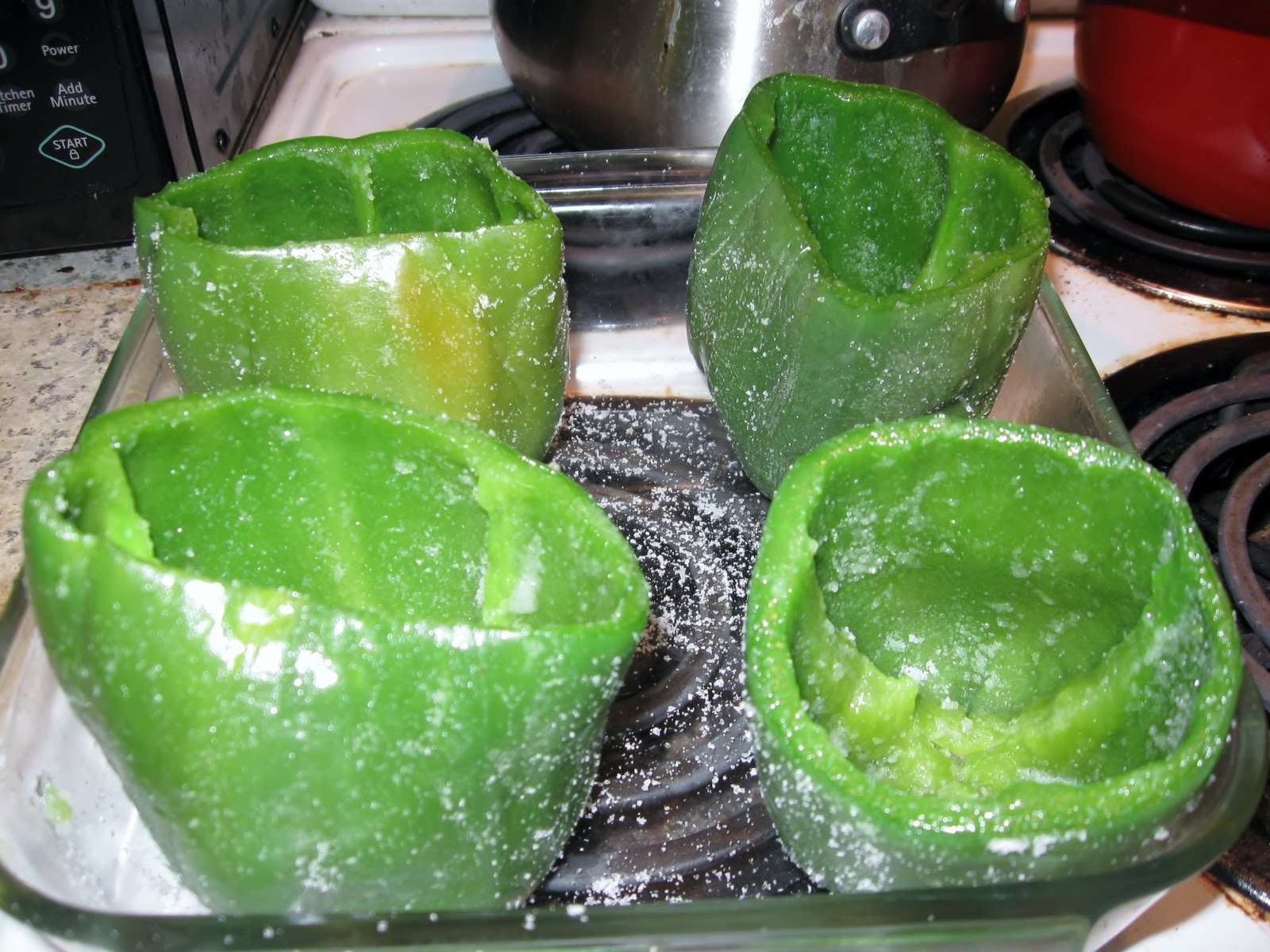
6. Salt the peppers well, inside and out, and stand them up in a baking dish. Stuff them with your filling, packing it in well. [I either had smallish peppers (I did) or I went overboard with the tomato (probably also true), as I had a fair bit of extra filling. No reason you couldn't save it and stuff something else later.]

7. Top peppers with grated cheese. I used mozzarella for the Italian-seasoned peppers and pepper Jack for the Mexican.

8. Bake for 30-40 minutes until cheese is bubbly and browned and the peppers have wrinkled up a bit.

And here's the result:


It definitely looks better than my previous stuffed pepper attempts, although I'm a bit disappointed that the filling doesn't stick together. An extra egg or two, as I advise above, would help with that. As would using bread crumbs instead of rice and/or mixing some cheese into the filling. The flavor combinations turned out quite well, if a little overboard on the salt.

The real question is, is the pepper itself improved. It's been nearly three years since I last had a stuffed pepper so I have no idea, to be honest. However, reading over those old posts, I don't sound entirely happy with the results and this time around, I think I am. The pepper is firm and flavorful but doesn't overwhelm the flavors of the fillings. I can definitely recommend it. I do wish I had done one without salting to compare and contrast, though.

Tuesday, January 25, 2011

CSA week seven - roast chicken and cherry tomatoes

When I looked around for recipes (excluding salads) using cherry tomatoes, most all I found agreed that roasting them was the way to go. That was the extent of many recipes, but this one, which I found at Epicurious but appears to have originated in Bon Appétit, goes a little bit further to good result. Still very easy and straightforward, though. It seems rather forgiving of variation so I've vagued it up a bit.

Ingredients:
2 chicken breasts with ribs or large chicken thighs
several garlic gloves, crushed and minced or pressed
1 handful of fresh herbs [I used marjoram and basil]
generous crushed red pepper
several Tablespoons olive oil
12 ounces cherry tomatoes, stemmed and washed [I supplemented the 8 ounces from the CSA with some small local heirloom tomatoes from the farmer's market.]

0. Preheat oven to 450 degrees.

1. Season the chicken, heat a cast iron pan and brown the skin side of the chicken in a little oil. Remove, skin-side up, to an 8"x11" baking pan.

2. Mix the garlic, herbs, red pepper and a few pinches of salt with the olive oil in a large bowl. Add tomatoes and toss.


3. Pour the tomato mixture over the chicken so that the tomatoes array themselves into a single layer around them, the chicken is coated in oil and some bits of garlic and herbs remain on top of the skin.

4. Bake until chicken reaches 160 degrees, about 30-35 minutes. Remove from oven and let sit for a few minutes for internal temperature to reach 165. Crush the tomatoes a little if they haven't collapsed.

Top with a little more fresh herbs and serve with crusty bread or some other starch to soak up the sauce.

I didn't brine or prep the chicken in any way so the meat is your usual underwhelming experience that is chicken, but there are a couple of real highlights here. First, the skin with the caramelized edges and crispy bits of baked on garlic is darn good eating. Second, the sauce, made of garlic and herb infused oil, chicken drippings and roast tomato is pretty fabulous too.

I probably could have used a larger pan and roasted some sliced potatoes too. Or turnips maybe. I'll see what I've got on hand next time we get cherry tomatoes.

Sunday, January 23, 2011

CSA week five - grapefruit anchovy salad

Grapefruit and anchovies sound like an odd combination, I'll admit, but it's not as far a reach as you might think. I'm just substituting the grapefruit into a traditional Sicilian orange and anchovy salad. I was prepared to add some sugar to adjust, but I was lucky enough to have a couple unusually sweet grapefruit. I let them sit for an extra week after they looked ripe; Maybe that made a difference.

Ingredients:
1 medium and 1 small grapefruit, cut into supremes and then into bite-sized pieces
two stems flat leaf parsley, roughly chopped
1 scallion, green part only, chopped
4 anchovy fillets, chopped
1 Tablespoon extra virgin olive oil
salt and pepper to taste (careful with the salt as you've got the anchovies)

1. Cut grapefruit into a bowl and drain the excess juice.

2. Add everything else, mix, taste and adjust seasoning.


This salad comes together a lot better than you'd expect. The balance is only slightly off a salad dressed in lemon vinaigrette. The salt cuts the bitterness of the grapefruit and the juiciness of the fruit buffers the saltiness of the anchovies. With everything balanced, the most prominent flavors to emerge are herbal with citrus tartness and olive oil unctuousness backing it up. Possibly that's because I started with two quite mild grapefruit. You'll have to bump up the other elements if yours are intensely sour and/or bitter.

Now that I know grapefruit goes with the salt and umami of anchovies, I want to try it with Worcestershire sauce. I'll let you know how that goes.

Saturday, January 22, 2011

CSA week six wrap-up, week seven start-up

I only had three cooking nights this week, but I managed to use the majority of my half share. The green beans, bok choy and curry leaves were in the curry I wrote about last time, of course. I also made a wilted komatsuna salad dressed in sesame oil that was pretty tasty.

For the collards and turnips, I thought I'd try a new cooking method. I put them in a pot with a cup of chicken stock, steamed with the lid on for 10 minutes, took the lid off, simmered the liquid entirely away, added a little oil and finished by getting a little color on them. Other than some timing issues (I'd add the turnips after five minutes next time), it turned out pretty well, I think. I threw in some garlic sausage too but I don't think it added too much. If I do it again, I want to find some way to incorporate bacon.

That leaves the peppers--which I still intend to stuff once I go shopping to buy some meat to stuff in them--the parsley and the leftover grapefruit. I've found a pretty interesting recipe to use the latter two in. I suspect it'll be revolting, but I'm curious enough to give it a try.

If I had known that this week's share would be so skimpy, I wouldn't have made such a concerted effort to use last weeks. Partially my fault as I left my lettuce behind as usual, but I got shorted turnips and cilantro. I intended to check my box carefully after missing out on mustard greens two weeks ago, but I was distracted by a woman picking all the good stuff out of the extras box. I suppose there's no actual rule against it, but it seems really inconsiderate to me, particularly if you're there early.

Still, I've got a bit to work with.


The braising mix, on the left, is actually more versatile than the name suggests. I'm thinking of a cream of greens soup, but I've got some other recipes that call for miscelaneous mid-weight greens that I might go with.

On right is collards again. I found a collard & potato salad recipe that I might try. Or I might do chips. Collards should work just as well as kale does. If I don't do the salad, I'll just keep the potatoes around as they're always handy.

The sapotes won't be ready for a couple weeks. The one I've already got on hand is approaching ripeness now, but I think I'll freeze the pulp until these two are ready and use them all at once.

That leaves the cherry tomatoes which I can rarely resist eating out of hand, but if I can resist, I want to roast them. Maybe with a chicken.

Thursday, January 20, 2011

Goan shrimp and vegetable curry

Suvir Saran, the author of the recipe I based this on wrote "I associate this dish's flavors with Goa" and "feel free to add whatever vegetables you want" so I'm guessing that this is not so very traditional. But it uses up three sprigs of the curry leaves, which is a lot for 4 servings, and "whatever vegetables you want" means a bunch of CSA vegetables I have so that's convenient.

Here's my version:

herb paste:
2 sprigs curry leaves, removed from stem
1 1/2-inch piece ginger, peeled and chopped
zest and pulp from 1/4 lime (substituting, poorly, for 1 Tablespoon lemongrass)
1/2 cup cilantro leaves and tender stems
1/2 hot pepper, chopped

1. Blend all that with a few Tablespoons of water into as smooth a paste as you can manage. Set aside.

Curry:
1 1/2 Tablespoons cooking oil
3/4 teaspoon whole cumin seed
1/2 teaspoon brown mustard seed
1 sprig curry leaves, removed from stem and roughly chopped
2 dried chile peppers
1/2 teaspoon ground turmeric
3/4 pound assorted vegetables, prepped (I used 1/2 pound green beans plus 1/4 pound baby bok choy)
1 can coconut milk
1/4 cup heavy cream
3/4 pound shrimp, peeled and deveined. Brined wouldn't be a bad idea either.
3 Tablespoons more cilantro, chopped
salt to taste

2. Put oil into a large pot over medium high heat. Add seeds. When they start popping, add curry leaves, peppers and turmeric. Stir and cook 1 minute.

3. Add the herb paste, reduce heat to medium low and cook 2-3 minutes more until fragrant.

4. Add the heartiest of the vegetables (green beans in my case) and some salt and cook until about half done, adding other, more delicate vegetables as appropriate.

5. Add coconut milk and cream plus some more salt. Turn heat up and bring to a boil. Return heat to medium low and simmer until vegetables are done to your liking.

6. Add shrimp and simmer 1-2 minutes until just cooked. Stir in cilantro, adjust seasoning and serve with rice.


And here it is:


All the sauce drained into the rice. Here it is still in the pot:


So, not bad. Not as intensely flavored as you'd expect given all those herbs and spices, but nicely fragrant of curry leaves. The coconut milk really takes on the cumin and mustard well and there's a little spice to it. My problem is just that the flavors are too distinct. The green beans taste like green beans and the shrimp tastes like shrimp. The sauce is nice but the rice soaked it all up. I think this is going to be one of those better the next day dishes. The flavors will blend with a good long soak.

Serving with some other starch instead of rice might be a good idea too. Chapatis maybe.